
Bob Hope
Comedian, actor, and USO entertainer for nearly 80 years.

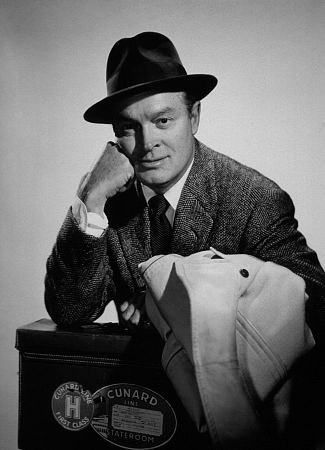
Trikosko, Marion S. · Public domain
He hosted the Academy Awards a record 19 times and was known for his rapid-fire, self-deprecating one-liners and his signature tune 'Thanks for the Memory.'
- died
- July 27, 2003, at age 100
- field
- Comedy, acting, entertainment
- nationality
- British-born American
- known_for
- USO tours, Road to ... films with Bing Crosby, hosting Academy Awards 19 times
Verified Timeline
Lore & Background
Bob Hope was born in Eltham, southeast London, the fifth of seven children (five sons and two daughters) of a stonemason father and a light opera singer mother.
Reader's Guide
Bob Hope's significance lies in his enduring impact on American entertainment and his decades-long service to military personnel through USO tours. Hope's comedic style—rapid-fire, self-deprecating one-liners—defined a generation of humor. His career spanned vaudeville, radio, television, and film, and he wrote 14 books. He reached his 100th birthday 59 days before his death in 2003, symbolizing a century of entertainment history.
Did You Know?
- Bob Hope was born in Eltham, southeast London, the fifth of seven children.
A Beckenham Boyhood and a Clock-Tower Expulsion
Robert Alan Monkhouse was born on 1 June 1928 at 168 Bromley Road, Beckenham, Kent, to a chartered accountant father and a mother from the Hansard family. His grandfather, John Monkhouse, had co-founded the prosperous Methodist firm Monk and Glass, makers of custard powder and jelly. A 2015 documentary later exposed that both Bob and his elder brother John had suffered physical and verbal abuse from their mother, a dark undercurrent beneath a respectable suburban childhood. Monkhouse attended Goring Hall School in Worthing and then Dulwich College in south London, where he was expelled for climbing the clock tower. Even as a schoolboy he was already earning as a writer and artist, contributing to The Beano and The Dandy and drawing for Hotspur, Wizard, and Adventure. At Dulwich he formed a creative partnership with fellow pupil Denis Gifford; the two would go on to establish their own publishing company, Streamline, in the early 1950s. Monkhouse also wrote more than a hundred Harlem Hotspots erotic novelettes, evidence of a restless, genre-hopping pen that would serve him well in the comedy world to come.
From Radio Gags to the Carry On Screen
Before he ever stepped in front of a television camera, Monkhouse made his name behind the microphone. In partnership with fellow Old Alleynian Denis Goodwin, he wrote radio comedy scripts and co-presented Smash Hits on Radio Luxembourg. Together they supplied material to household-name comedians including Arthur Askey, Jimmy Edwards, Ted Ray, and Max Miller, and even penned gags for American star Bob Hope during his British tours. When Goodwin dissolved the partnership in 1962, it was specifically to join Hope's team. Monkhouse's leap to television came in 1956 when he hosted Do You Trust Your Wife?, a British adaptation of an American game format. That single credit snowballed into more than thirty quiz programmes across British screens. His film work included a role in the very first Carry On film, Carry On Sergeant (1958), as well as the dental comedies Dentist in the Chair (1960) and Dentist on the Job (1961)—a choice he later regretted, wishing he had stayed with the Carry On franchise. By the late 1960s he had co-founded the Mitchell Monkhouse Agency with Malcolm Mitchell, and in 1979 he took a much-disliked part in the American sketch series Bonkers! alongside the Hudson Brothers and Joan Rivers.
The Golden Shot and a Reign Over British Quizzes
By the latter decades of his career, Monkhouse was arguably more recognised as a television quiz host than as a comedian. His defining slot was The Golden Shot, which he fronted from July 1967 to January 1972 and again from July 1974 to April 1975. The programme aired live fifty-two weeks a year and drew up to seventeen million viewers. His first run ended amid allegations—firmly denied by him—that he had accepted bribes to feature branded products as on-screen advertisements. He returned in 1974 after successors Norman Vaughan and Charlie Williams failed to satisfy. Beyond The Golden Shot, his presenting portfolio stretched across Celebrity Squares, Family Fortunes, Bob's Full House, and three series of the Opportunity Knocks revival between 1987 and 1989, with audiences routinely exceeding fifteen million. From 1996 to 1998 he hosted The National Lottery Live on Saturday evenings on BBC One, coining the catchphrase "I know I'm a sinner, but make me a winner!" and opening each episode with several minutes of topical comedy. On 30 November 1996, the lottery machine broke down live, delaying the draw by fifty minutes until after that night's Casualty. He later took over Wipeout from Paul Daniels when the show moved to Manchester and shifted to daytime, hosting it from 1998 until months before his death.
The Ad-Lib King and a Final Curtain
Monkhouse was a respected stand-up comedian whose greatest gift was ad-libbing. He became a much-sought-after after-dinner speaker and eventually codified his approach in the book Just Say a Few Words, published by Lennard in 1988 and reissued in 1999. Yet his style, once dominant, fell out of fashion in the 1980s; impressionists made sport of his slickness, and critics accused him of insincerity. The tide turned in the 1990s, and a memorable appearance on Have I Got News for You helped rekindle public affection. His final stand-up performance took place at London's Albany Comedy Club on 25 August 2003, just four months before his death on 29 December of that year. The show was broadcast by the BBC in 2016, again in November 2019 and April 2020, and a final time in December 2023 to mark the twentieth anniversary of his passing. The audience included comedians he had personally invited—Reece Shearsmith, Jon Culshaw, David Walliams, Fiona Allen, and Mark Steel—alongside a rare public appearance by his friend Mike Yarwood. That single evening, captured on tape, became a lasting testament to a performer who could still, at seventy-five, fill a room with improvised laughter.
Gallery
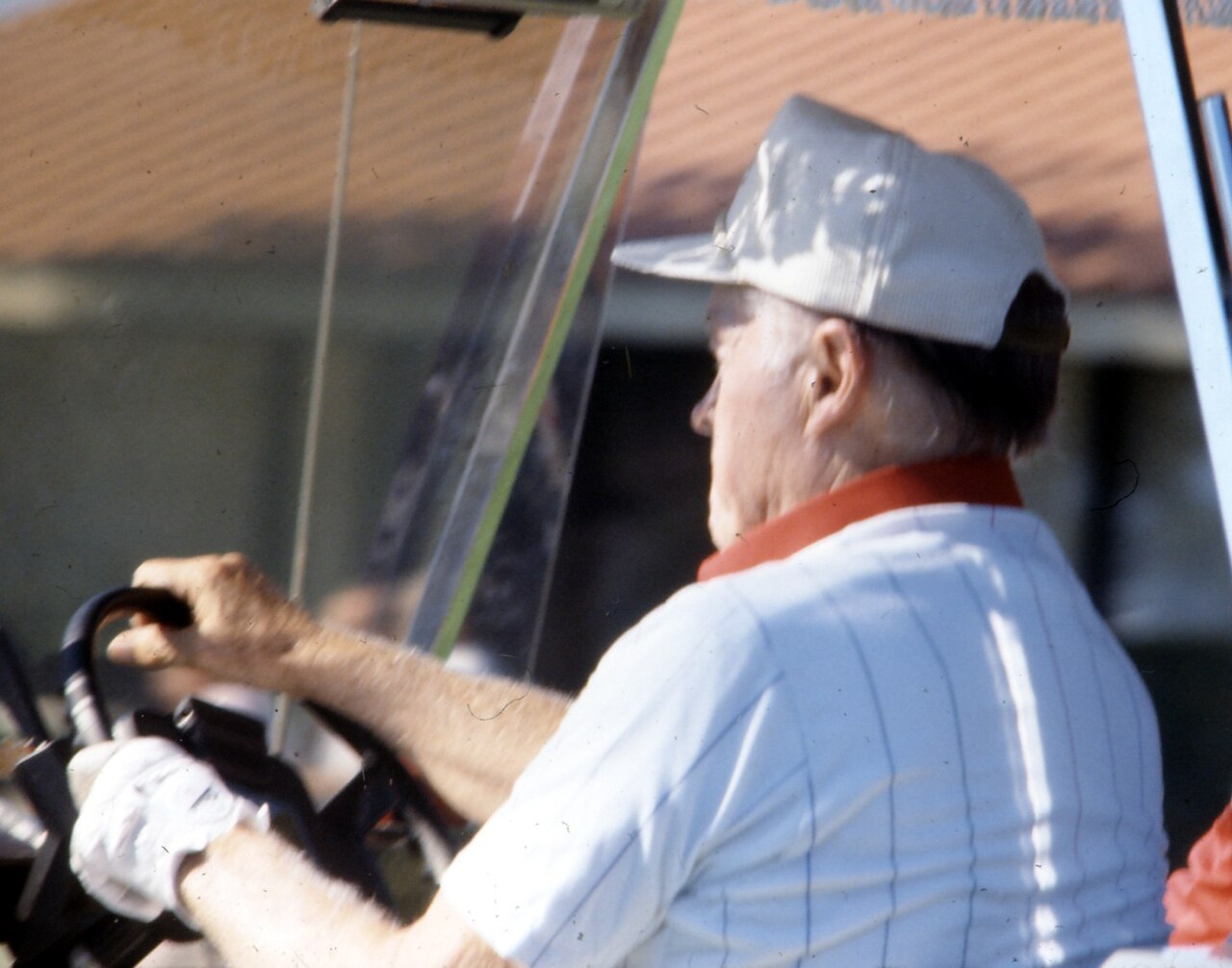
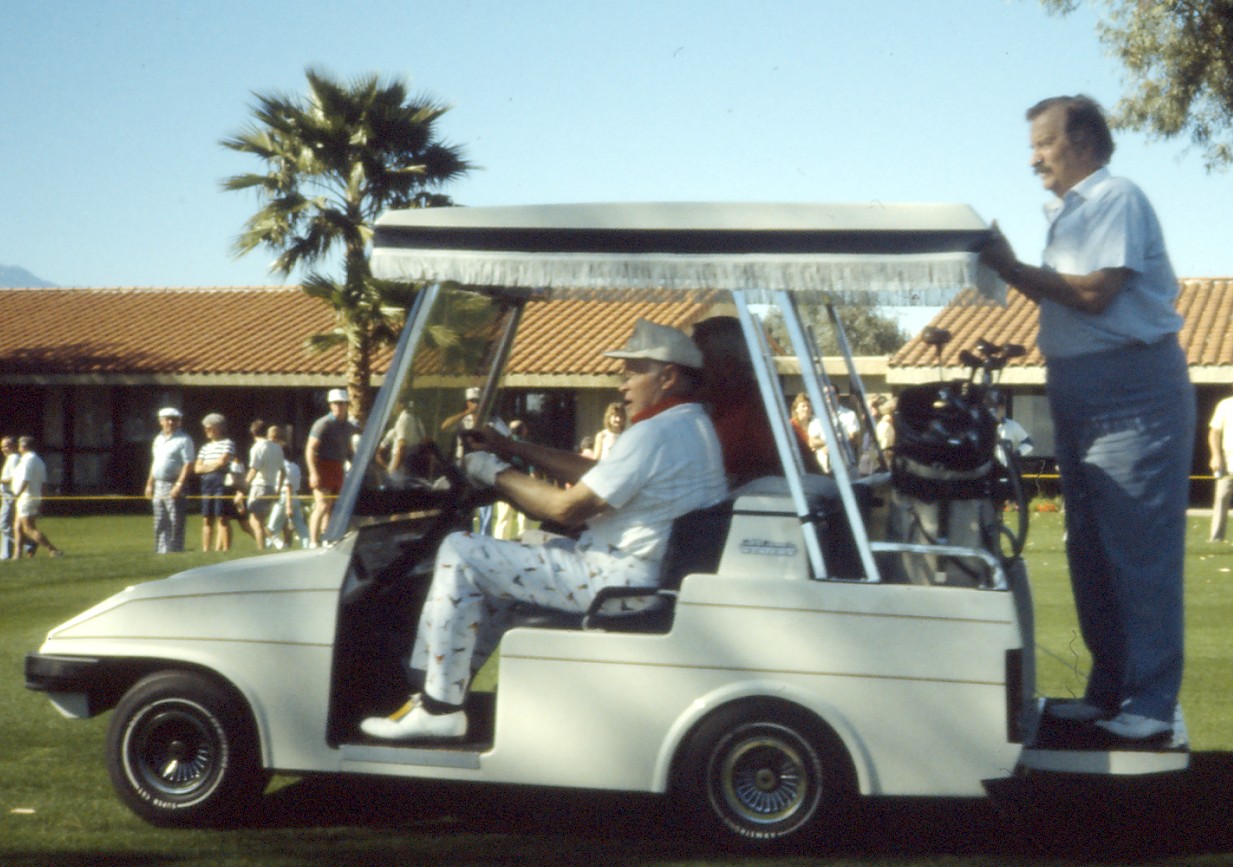
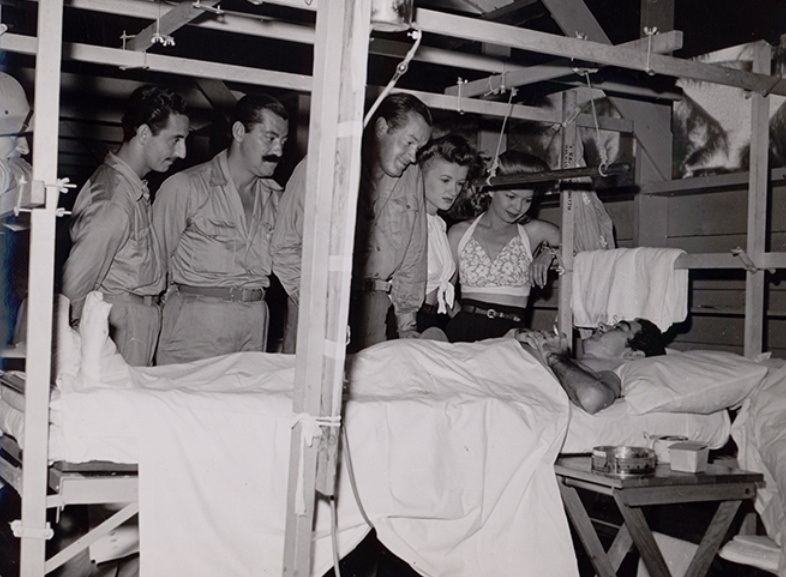
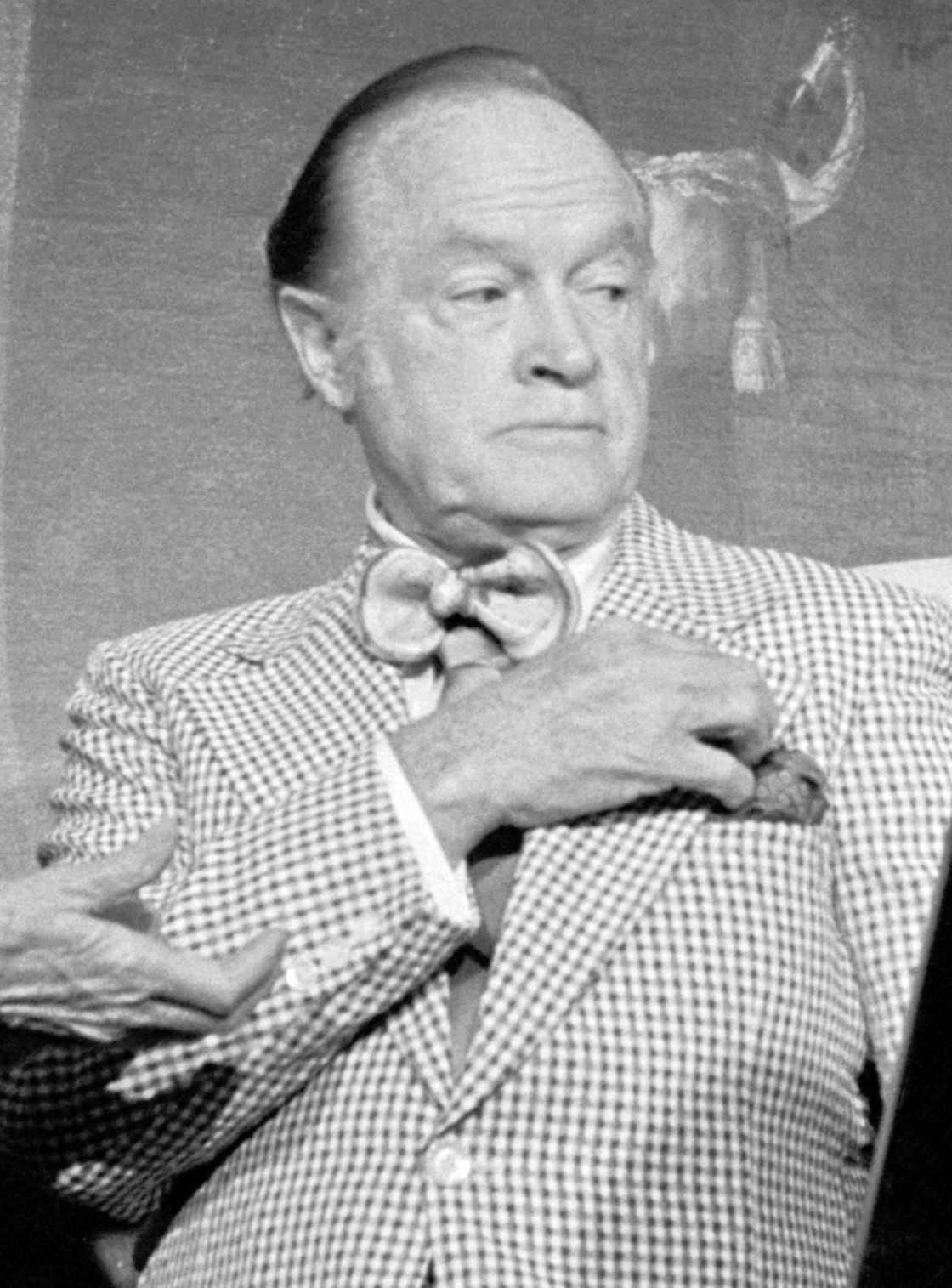
Frequently Asked Questions
Who is Bob Hope?
Bob Hope was a British-born American comedian, actor, and entertainer whose career stretched across roughly eight decades, from vaudeville stages to television and film. Born Leslie Townes Hope in Eltham, London, in 1903, he became one of the most recognizable comedy figures of the twentieth century.
What is Bob Hope most famous for?
He is best remembered for his USO tours entertaining troops, his rapid-fire self-deprecating one-liners, and the seven 'Road to...' musical comedies he starred in alongside Bing Crosby. His signature tune 'Thanks for the Memory' became inseparable from his public persona.
How many times did Bob Hope host the Academy Awards?
Hope emceed the Oscars a record nineteen times, making him the most frequent host in the ceremony's history. His hosting style leaned on quick, self-mocking jokes rather than lengthy monologues.
When did Bob Hope die and at what age?
He passed away on July 27, 2003, at the age of 100, just a few months after his centennial birthday. His death marked the close of a career that had spanned nearly eighty years across multiple entertainment mediums.
Why is Bob Hope considered important to comedy history?
His nearly eight-decade run across vaudeville, radio, television, and more than seventy films (starring in fifty-four) made him a bridge between multiple eras of American entertainment. His dedication to USO tours, performing for service members in conflict zones, cemented his status as a cultural institution well beyond a single comedian.
More in Comedians And Satirists 1-20
Spotted an error? Know more?
This is a living reference — every entry is fact-audited, and reader corrections feed straight into our audit queue. Suggest an edit · See this site's audit record